
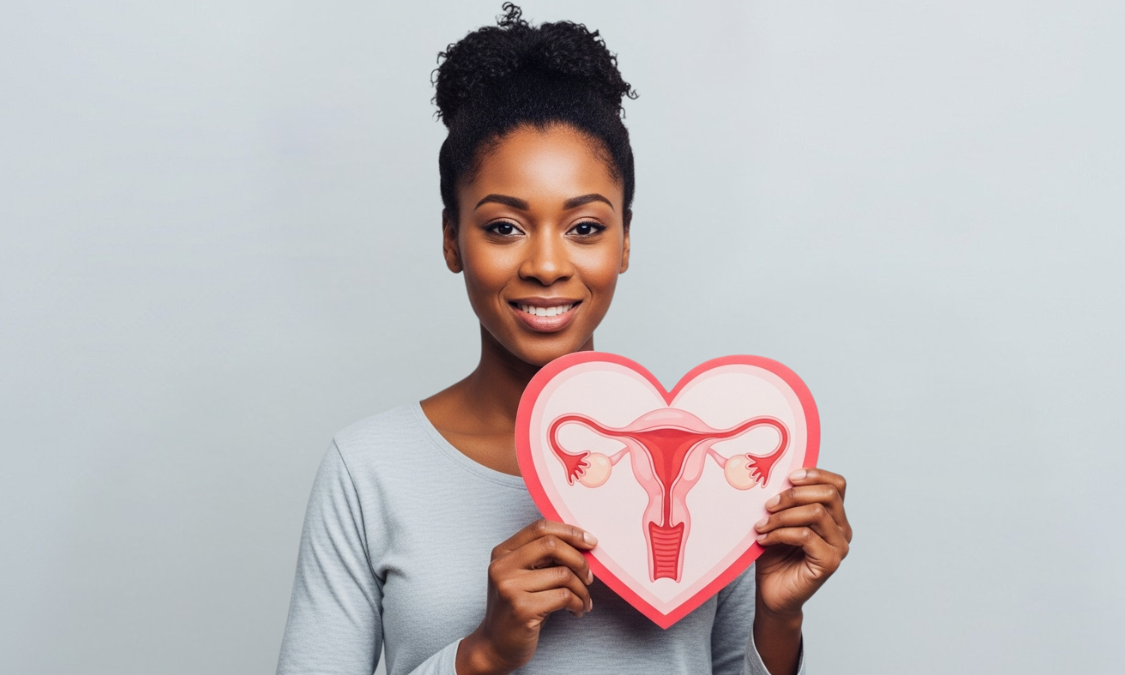
Conversations about menstrual health in Africa are often brief and whispered, so a girl may learn how to use pads and stay discreet but rarely learns what a healthy cycle looks like. People often brush aside pain, irregular periods, or missed cycles as simply part of womanhood.
This silence carries a heavy cost, serving as one of the main reasons people poorly understand and often overlook PCOS and menstrual health in African women. When women don’t know what a normal cycle looks like, they can’t recognize when something is wrong.
From Silence to Confusion
Because people don’t openly discuss menstrual health, many women grow up normalizing unhealthy cycles. Consequently, a girl who bleeds heavily for two weeks may simply think it’s her fate, and another who skips her period for months may quietly blame stress. In reality, both may be experiencing symptoms of Polycystic Ovary Syndrome (PCOS).
This lack of open dialogue means people often dismiss menstrual changes, which should be seen as medical signals, as bad luck or lifestyle issues. This confusion becomes the first barrier to proper diagnosis.
Understanding Healthy Cycles
To understand PCOS’s impact, you must first know what a healthy cycle looks like. A normal menstrual cycle typically comes every 21 to 35 days, lasts three to seven days, and doesn’t cause pain so severe that it makes daily life impossible. Anything outside this range can signal that something may be wrong. However, because people never teach many African women these details, they accept irregularity and pain as normal. This acceptance, in turn, allows PCOS to remain invisible.
The Impact of PCOS on Menstrual Health
This silence allows PCOS to disrupt women’s health unchecked. As a hormonal condition, PCOS interferes with ovulation, and once ovulation is disrupted, menstrual cycles become irregular. For some women, periods stop altogether. For others, bleeding becomes unpredictable, unusually heavy, or unexpectedly light.
These are not minor inconveniences; they are important health warnings. When women ignore them, they can affect fertility, increase the risk of diabetes, and even impact mental health. Yet, in contexts where people expect silence, many women adapt to these disruptions rather than seek help.
The Cultural Weight Behind the Silence
Why is it so hard to break this silence? A major part of the answer lies in culture. Across many African societies, people praise endurance. They call a woman who pushes through painful cramps strong and see a girl who never complains about irregular cycles as disciplined. Religion and tradition often reinforce the idea that menstruation should remain private. Over time, people carry this mindset into healthcare spaces. When women report irregular cycles, healthcare providers frequently tell them it is stress, diet, or a normal variation. Providers rarely consider PCOS, which leaves many women undiagnosed for years.
Breaking the Cycle
Confronting PCOS and menstrual health in African women requires breaking this silence. For starters, families need to speak more openly with their daughters about what healthy cycles look like. Similarly, schools should expand menstrual education beyond hygiene, teaching young girls how to recognize warning signs. Additionally, healthcare providers must take menstrual complaints seriously and treat them as vital medical information, not trivial details. Finally, communities too must shift the way they see dignity. Silence should no longer be mistaken for strength, as women deserve the right to talk about their health without shame.
Why This Conversation Cannot Wait
PCOS is one of the most common hormonal conditions affecting women worldwide, yet it is underdiagnosed in Africa. The issue is not a lack of symptoms; the body is already sending signals through irregular cycles. Rather, the issue is silence. By encouraging open discussion, we do more than challenge stigma. We give African women the tools to understand their bodies, seek proper care, and protect their health. Menstrual health is not just a side issue; it is central to women’s wellbeing, and until we treat it that way, PCOS will continue to remain hidden.
This article is for information purposes only and must not be substituted for professional medical advice.
