
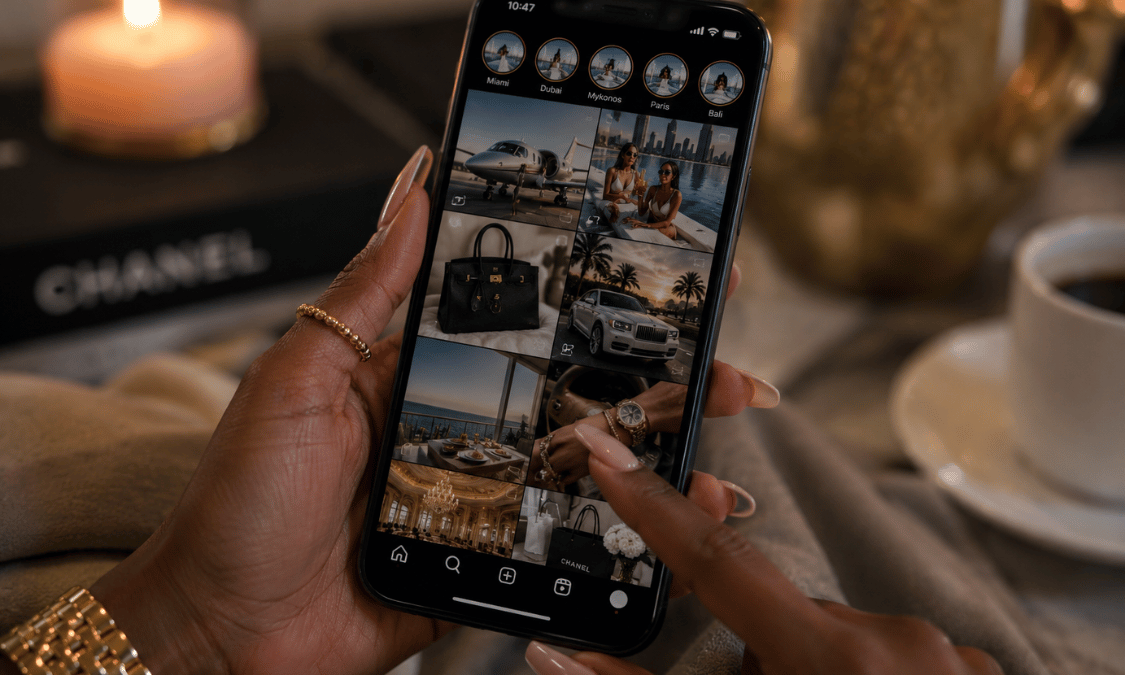
You open your phone for a few minutes and suddenly your life feels smaller. Your apartment starts to feel too plain, your clothes look boring and your weekend plans feel uneventful. Even your salary starts to feel like it should be doing more. Meanwhile, nothing in your actual life changed. What changed was your exposure. That is the psychology behind lifestyle inflation, and social media may be accelerating it faster than we realize.
What Is Lifestyle Inflation?
At its core, lifestyle inflation happens when spending increases as income increases. Someone gets a raise, then upgrades their apartment, starts dining out more, buys more expensive clothes or changes their daily habits to match their new income level.
On paper, that sounds harmless. After all, most people naturally want a better quality of life as they earn more.
The problem starts when spending rises faster than financial stability.
Even worse, social media has created a version of lifestyle inflation that is no longer tied to income at all. Instead, it is tied to visibility.
People now experience financial pressure simply from seeing how other people live.
A person can feel satisfied with their phone until they scroll through endless unboxing videos and upgrade content online. Someone can feel grateful for their wardrobe until social media repeatedly pushes designer fashion, luxury hauls, and aesthetic lifestyle content onto their feed. Before long, ordinary life starts feeling like something to escape from instead of something to appreciate.
Social Media Has Changed What “Normal” Looks Like
Previous generations compared themselves to neighbors, coworkers, or family friends. Today, comparison is constant, global and amplified by algorithms.
In a single scroll, people encounter luxury vacations, expensive skincare routines, destination birthdays, curated apartments, designer items, and polished “soft life” content from hundreds of people at once. Over time, the brain slowly starts treating those lifestyles as normal.
That is where lifestyle inflation becomes dangerous. The more elevated lifestyles people consume online, the more their expectations quietly rise offline.
Social media also removes context. People rarely post the debt behind the vacation, the stress behind the luxury apartment, or the anxiety behind maintaining appearances. Instead, platforms reward polished moments and aspirational living. As a result, many people start comparing their real lives to carefully selected fragments of someone else’s reality.
The Rise of Performance Wealth
Social media has also created what many people now experience as performance wealth. This is the pressure to look financially successful, even when the reality may be very different offline.
That is why so much modern spending revolves around visibility. The aesthetic café is no longer just about coffee. The destination birthday is not always just about celebration. Designer items, luxury vacations, and curated experiences have increasingly become signals of status online.
Of course, there is nothing wrong with enjoying beautiful things. The issue begins when spending becomes emotionally tied to validation and appearance.
As a result, lifestyle inflation quietly turns aspiration into obligation. People begin upgrading their lifestyles not because they truly want to, but because ordinary living starts feeling socially inadequate.
The Financial Cost of Lifestyle Inflation
Lifestyle inflation affects more than spending habits. Over time, it can quietly damage both financial health and emotional wellbeing.
Here are some of the most common effects:
- People spend more money trying to maintain appearances online.
- Savings become harder to build because lifestyle upgrades keep increasing.
- Financial anxiety grows, even among people with stable incomes.
- Ordinary life begins to feel emotionally unsatisfying.
- Social comparison creates pressure to constantly upgrade.
- Debt increases as people try to match lifestyles they consume online.
- Small achievements stop feeling meaningful because expectations keep rising.
- Burnout becomes more common because people feel pressure to constantly “level up.”
One of the most dangerous parts of lifestyle inflation is that satisfaction keeps moving. The nicer apartment, new phone or expensive experience quickly becomes the new normal. Then the cycle starts again.
How to Protect Yourself From Lifestyle Inflation
Escaping lifestyle inflation does not mean rejecting ambition or pretending money does not matter. It simply means becoming more intentional about where your standards are coming from.
Here are a few ways to protect your financial health:
- Pay attention to spending triggers that come from comparison rather than genuine need.
- Separate inspiration from pressure when consuming lifestyle content online.
- Avoid upgrading your lifestyle simply because it has become trendy or visible online.
- Create personal financial goals that are not tied to social validation.
- Remember that social media rarely shows the full financial reality behind luxury lifestyles.
- Focus on long-term stability instead of short-term appearances.
- Spend money on things that genuinely improve your quality of life, not just your online image.
- Take breaks from content that constantly makes you feel behind.
A financially healthy life does not always look impressive online. Sometimes it looks like staying within budget, building savings quietly, or resisting unnecessary upgrades.
Those choices may not always be visible, but they create something more valuable than online validation: stability.
Because at the end of the day, visibility has never been the same thing as value.
