
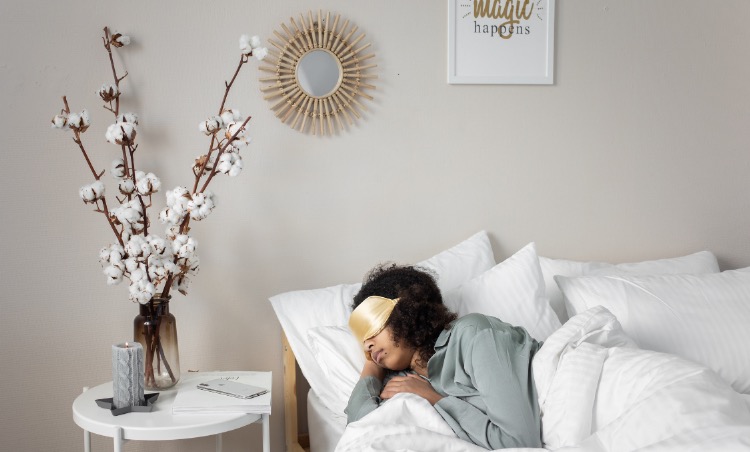
For a lot of us, sleep isn’t hard because we’re not tired. It’s hard because we don’t know how to shut down. Our brains stay on long after our bodies are ready to rest. You’re lying in bed, exhausted, but still scrolling, still thinking, still waiting to feel done enough to sleep. That’s not insomnia. That’s sleep anxiety.
The Loop You Already Know
Most people who struggle with sleep during the week fall into some version of the same pattern. You wake up tired, push through your day on caffeine and willpower, and by evening, you’re finally starting to feel like yourself again. So instead of going to bed, you stretch the night. You tell yourself you deserve some downtime. Next thing you know, it’s way too late to get a full night’s rest, and the cycle starts all over again the next morning.
This isn’t just a “bad routine.” It’s a coping mechanism. You’re pushing sleep because you’re pushing away the parts of the day that didn’t get processed. And when the day goes quiet, that’s when everything starts to speak up. The anxiety, the guilt, the mental to-do list, the future you haven’t figured out yet. So instead of sleeping, you scroll. You snack. You replay conversations from five years ago and suddenly it’s 3:00 a.m.
You’re Not Resting Because You Don’t Feel Done
This is one of the major causes of sleep anxiety. Your day doesn’t feel complete. You meant to do more. You feel behind. You didn’t finish that task. You forgot to call someone. You’re still carrying tension from a conversation you didn’t fully process. There’s this quiet, constant sense that you didn’t do “enough,” so rest starts to feel unearned.
Sleep anxiety thrives in that space between tired and satisfied, where your body is ready to crash but your brain is still negotiating closure. Sleep becomes something you get to do after everything else. Once you’ve earned it. Once the list is done. Once you’re caught up. But the truth is, the list will never be done. There will always be one more thing. If you’re waiting for life to feel complete before you rest, you’ll stay tired forever.
The Habits That Quietly Undermine Sleep
Most people don’t mean to ruin their chances at a decent night’s sleep, but these small, everyday habits make it harder to settle down, even if you’re physically tired:
- Caffeine too late in the day
- Constant screen use, especially right before bed
- Overeating or snacking close to bedtime
- Trying to “catch up” on everything at night
- Associating rest with laziness or guilt
- Letting your phone be the last thing you see and touch
None of these things feel major in the moment, but they stack up and keep your nervous system running when it should be winding down. They don’t just disrupt your sleep. They trigger sleep anxiety, keeping you mentally active even when you want rest. (Learn more about sleep disruptors in this study.)
What Actually Helps Sleep-related Anxiety
This isn’t about building a perfect sleep routine or waking up at 5:00 a.m. to do yoga. It’s about shifting just enough to make rest possible again.
- Create a shutdown time
You don’t have to aim for an early bedtime. Just a consistent one. Pick a realistic cutoff point. Not aspirational. Just something you can actually stick to. - Don’t wait until you’re done. Decide when to stop.
You will always have unfinished tasks. The key is to stop letting your to-do list decide when your day ends. Start ending your day because your body needs rest, not because your inbox is empty. - Make your bedroom boring again
If your phone, laptop, snacks, and late-night shows are all within reach, your room isn’t built for rest. Start treating it like a space to sleep, not a mini entertainment center. - Dump the noise
Before bed, take five minutes to write down anything you’re thinking about, including tasks, worries, reminders. The goal isn’t clarity or reflection. It’s just getting the chaos out of your head and onto something else. One of the simplest ways to lower sleep anxiety is giving your thoughts somewhere else to go. - Stop calling it “me time” if it’s just avoidance
We all need space to decompress. But when that space is filled with overstimulation and regret, it’s not restful. Be honest. Are you relaxing, or are you numbing out? - Try white noise or music
White noise can block out sudden background sounds and create a steady audio environment. Soft music, especially instrumental or ambient playlists, can help slow your thoughts and ease anxiety. The key is to keep it consistent, low-volume, and free of distractions. No songs that make you spiral or start singing along. For many people, this is a helpful cue to calm sleep anxiety before it kicks in.
It’s Time for a Reset
Most people who struggle with sleep aren’t dealing with clinical insomnia. They’re dealing with sleep anxiety. You can’t keep running on fumes and expect sleep to save you when it’s the first thing you keep sacrificing.
Start small. Cut the screen earlier. Stop waiting to be done. Go to bed before the exhaustion turns into chaos. You don’t need to fix your whole life tonight but getting decent sleep might help you face it tomorrow.
