
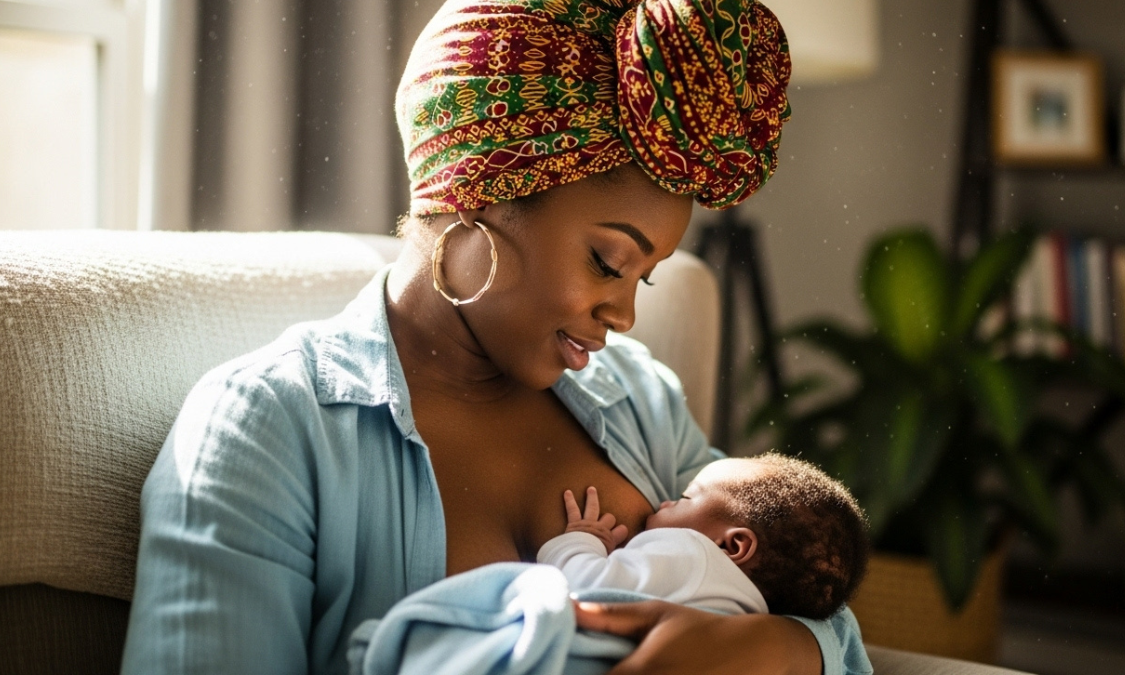
Breastfeeding is beautiful, natural, and powerful but let’s be honest, it’s also surrounded by a cloud of myths, especially for African women. Whether it’s advice from well-meaning aunties or comments from strangers who think they know your body better than you do, it can get overwhelming.
World Breastfeeding Week earlier this month highlighted just how persistent these myths can be. Whether you’re a new mom, expecting a baby, or simply curious, remember that not everything you’ve heard about breastfeeding is true.
Let’s break down seven of the most common myths and set the record straight.
1. “Breastfeeding will make your breasts sag.”
This is one of the most common myths. Breast changes happen during pregnancy due to hormones, not breastfeeding. Factors like age, genetics, and weight gain play a bigger role in how your body looks after childbirth.
Nursing your baby does not ruin your body. It is something your body was made to do.
2. “You must give babies water when it’s hot.”
Yes, it can get extremely hot in many parts of Africa. But even in high temperatures, breast milk is enough. It contains all the water and nutrients your baby needs in the first six months.
Giving newborns extra water can actually be harmful. Unless a doctor says otherwise, your breast milk is more than enough.
3. “Colostrum is dirty or cursed.”
Colostrum is the thick yellow milk your body produces in the first few days after birth. It is not dirty. It is rich in nutrients and antibodies that protect your baby from infections.
This early milk is sometimes called “liquid gold” because of how important it is. Do not throw it away. Give it proudly.
4. “Sex while breastfeeding spoils the milk.”
This idea comes from stigma, not science. Breast milk does not spoil because of sexual activity. The quality of your milk stays the same. You can breastfeed your baby and still have a personal life. There is nothing wrong with being both a mother and a woman.
5. “Only poor women breastfeed.”
This myth is rooted in outdated beliefs. Breastfeeding is not a sign of poverty. It is a healthy, natural choice that benefits both mother and baby.
Health professionals around the world recommend it because of its long-term health benefits. Your choice to breastfeed is not about status. It is about care.
6. “If your baby cries a lot, your milk isn’t enough.”
Babies cry for many reasons. It could be hunger, but it could also be tiredness, gas, or needing comfort.
Crying alone is not a sign that your milk is not enough. If your baby is gaining weight and has regular wet diapers, your supply is fine. Trust your body.
7. “Breastfeeding makes you less attractive.”
There is nothing unattractive about feeding your baby. This myth is harmful and unfair.
Your body is doing something amazing. It is keeping another human alive. That is not something to hide. It is something to honour.
Breastfeeding is deeply personal. It comes with highs, lows, and a lot of noise in between. Myths make it harder than it needs to be, especially when they come from places that should offer support.
The reminder from World Breastfeeding Week is simple: unlearn what no longer serves you. Trust your body. Ask questions. Share your story. And most importantly, know that you are not alone.
