
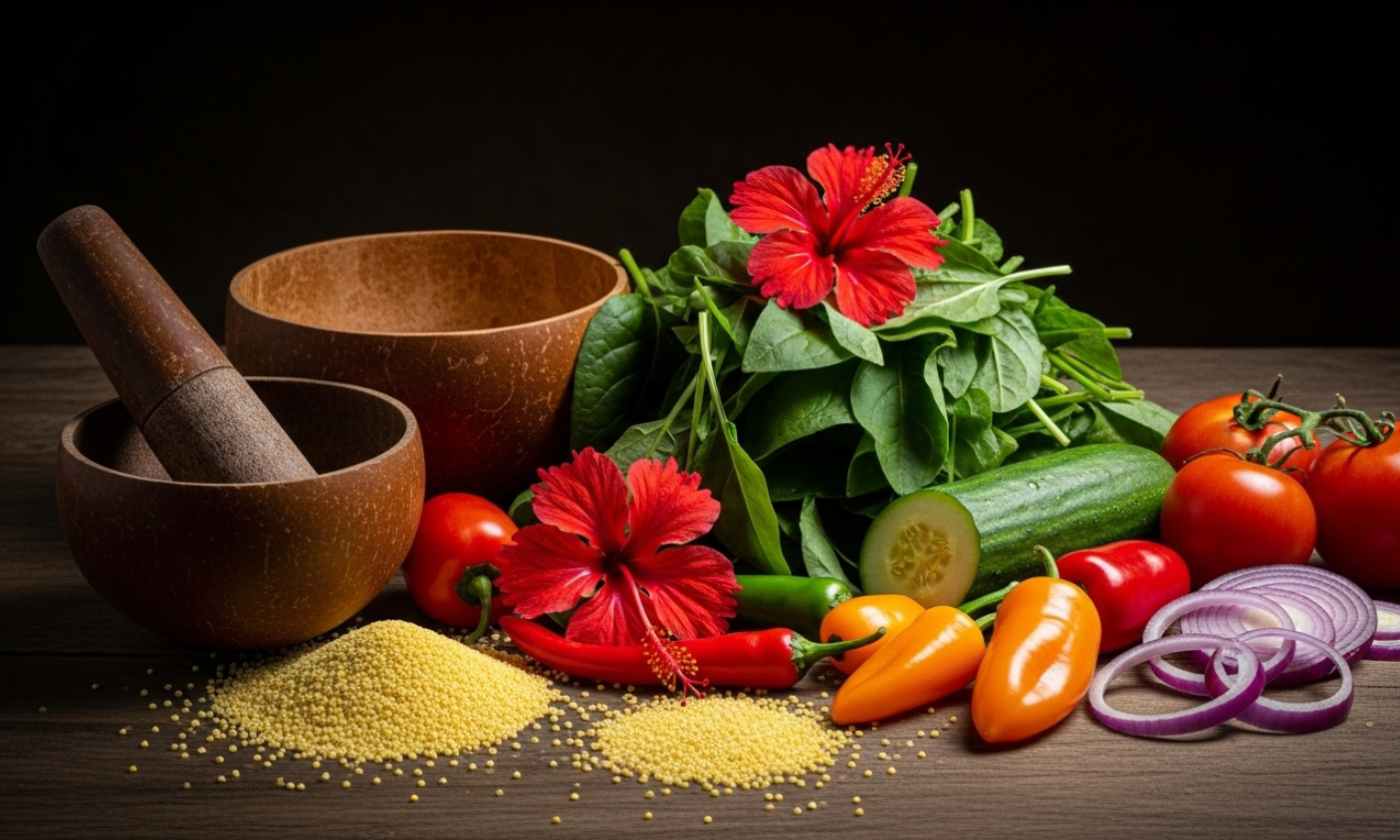
Food is more than something we eat every day. It connects us to our roots, fuels our bodies, and brings people together around the table. Across Africa, families have long prepared dishes that are packed with flavor and nutrients. These healthy African meals show how simple, local ingredients can create meals that energize, heal, and delight.
Today is World Food Day 2025, and the theme is “Hand in Hand for Better Foods and a Better Future,” which reminds us that the choices we make about what we eat affect not only our health but also our communities and the planet. By cooking and enjoying traditional African dishes, we support local farmers, reduce food waste, and celebrate the continent’s rich culinary heritage. In addition, choosing nutritious meals helps our bodies stay strong and our minds stay sharp.
Let’s explore six African dishes that are delicious, wholesome, and easy to enjoy at home. Each one comes with medicinal benefits and a drink pairing to enhance its effects.
1. Efo Riro (Nigeria)
Efo Riro is a spicy spinach stew cooked with fish or lean meat, tomatoes, and peppers. Spinach provides iron, which strengthens blood, while tomatoes add antioxidants that support heart health. It is also made with palm oil which supplies vitamin E for glowing skin. When you eat Efo Riro, you not only satisfy your taste buds but also give your body a nutrient boost.
Healthy Drink Pairing: Zobo (hibiscus tea) – rich in antioxidants and naturally lowers blood pressure while aiding digestion.
2. Kontomire Stew (Ghana)
Kontomire Stew or Palaver sauce uses cocoyam leaves simmered with tomatoes, onions, and fish or beans. The leaves are rich in calcium, which strengthens bones, and fiber, which aids digestion. In addition, the tomatoes provide antioxidants that reduce inflammation. This stew demonstrates that simple ingredients can deliver major health benefits.
Healthy Drink Pairing: Kunu – a millet-based probiotic drink that boosts gut health and maintains energy levels.
3. Injera with Misir Wot (Ethiopia)
Injera is a fermented teff flatbread served with Misir Wot, a red lentil stew. Teff provides protein and iron, and lentils supply fiber and B vitamins for energy. Moreover, the fermentation adds probiotics, which support gut health and digestion. Eating this dish feels hearty and energizing while promoting wellness from the inside out.
Healthy Drink Pairing: Herbal or mint tea soothes the stomach and balances the spices.
4. Chakalaka with Morogo (South Africa)
Chakalaka is a spicy vegetable relish that pairs perfectly with Morogo, a type of wild spinach. The combination delivers vitamins A and C, antioxidants, and fiber. As a result, it supports immunity, heart health, and detoxification. This dish is lively, nutritious, and a wonderful way to include more vegetables in your diet.
Healthy Drink Pairing: Rooibos tea provides antioxidants and is naturally caffeine-free.
5. Chickpea & Vegetable Tagine (Morocco)
Moroccan tagines combine chickpeas with seasonal vegetables and spices such as turmeric and cumin. Chickpeas supply protein and fiber for digestive and heart health, while the spices reduce inflammation. In addition, slow cooking enhances both the flavor and nutrient content. This tagine is comforting, aromatic, and packed with wellness benefits.
Healthy Drink Pairing: Mint tea refreshes the palate and complements the spices.
6. Ugali with Sukuma Wiki (Kenya/Tanzania)
Ugali is a staple maize meal often served with Sukuma Wiki, a type of collard greens. The greens provide vitamins A and C, and the maize delivers complex carbohydrates for steady energy. This simple meal shows that healthy eating can be accessible, filling, and deeply satisfying.
Healthy Drink Pairing: Tamarind juice is naturally tangy, rich in antioxidants, and supports digestion.
Which of these healthy African meals will you try next? Each dish brings flavor, nutrients, and a taste of Africa straight to your table. Enjoy the experience, explore new ingredients, and make healthy eating a delicious adventure.
This article is for information purposes only and must not be substituted for professional advice.
