
You’ve been showing up. You’ve logged every gym session. Your water intake is consistent. You’re getting enough sleep. But the mirror still isn’t reflecting the progress you expected, and the scale barely seems to move. The truth is, low-calorie African foods may be the missing piece.
Exercise builds strength, improves your fitness, and supports fat loss. But what you eat ultimately decides whether you reach the calorie deficit that drives weight loss. You can train five days a week and still struggle to see results. That’s not because you’re doing anything wrong. It’s because your meals are quietly working against your effort.
In this guide, we’ll explore low-calorie African foods that make it easier to eat well and stay consistent. These are the foods that can finally get you the results you’ve been working so hard for.
What Are Low-Calorie Foods?
Food does more of the deficit-building work than most people give it credit for. So it helps to understand what actually makes a food “low-calorie” in the first place.
Low-calorie foods simply give you fewer calories per gram than their volume or nutrition would suggest. Nutritionists often call this “energy density.” A food with low energy density fills your plate and your stomach without loading you up on calories. A food with high energy density, on the other hand, can pack hundreds of calories into a small portion.
Think about the difference between a bowl of vegetable soup and a bowl of fried rice with extra oil. Both might look similarly sized on your plate. Yet one delivers a fraction of the calories, because it’s built on water, fibre, and lean protein instead of fat and refined starch. That’s the entire logic behind low-calorie eating.
It’s not about eating less food. It’s about choosing food that lets you eat a satisfying amount while keeping your calorie intake in check. Once you understand this, something shifts. You start to see that African cuisine already has a long list of naturally low-calorie, high-satiety dishes. We just don’t always cook them that way.
What Is a Calorie Deficit?
A calorie deficit happens when you consistently eat fewer calories than your body burns in a day. Your body needs a certain amount of energy just to keep your organs running, your heart beating, and your brain functioning. We call this baseline your basal metabolic rate. On top of that, you burn additional calories through movement, digestion, and exercise.
When you eat less than that total number, your body has to pull the difference from somewhere. That somewhere is usually stored fat. This is why a calorie deficit sits at the center of nearly every weight loss method.
Strip away the branding, and it always comes back to the same math. Eat less than you burn, and your body will tap into its reserves. What changes from method to method is simply how people choose to create that deficit. And that’s where food choice becomes everything.
How to Achieve a Calorie Deficit
Creating a calorie deficit doesn’t have to mean starving yourself or cutting out entire food groups. In fact, the most sustainable deficits come from small, consistent shifts rather than drastic ones.
- Focus on food volume. Foods with lower energy density, like the ones on the list below, let you eat a full plate and still land under your calorie target.
- Prioritise protein and fibre at every meal. Both slow down digestion and keep you full for longer. That naturally reduces how much you snack between meals.
- Pay attention to cooking method. Frying adds significant calories to almost any food. Switching to boiling, steaming, grilling, or roasting can cut hundreds of calories without changing the ingredients you’re using.
- Move your body regularly. Even something as simple as walking more during the day adds to the calories you burn. You don’t need another trip to the gym for that.
7 Low-Calorie African Foods to Build Your Plate Around
Now that you know the levers, here’s where theory meets your kitchen. These low-calorie African foods aren’t obscure health foods you have to hunt down at a specialty store. They’re dishes you already know, made with a few intentional tweaks that keep the calories down without losing the flavour.
Steamed Bean Pudding (Moi Moi)
This dish is known as moi moi in Nigeria. It’s closely related to tubaani, a steamed bean cake eaten across Ghana and Togo. Moi moi is made from blended beans and is high in both protein and fibre, two nutrients that work together to keep you full for hours after eating.
Because it’s steamed rather than fried, it avoids the extra oil that soaks into fried bean fritters. In Nigeria, that’s akara. In Ghana, it’s called koose. If you’re used to the fried version, this swap alone can save you a significant number of calories. You still get nearly the same base ingredient.
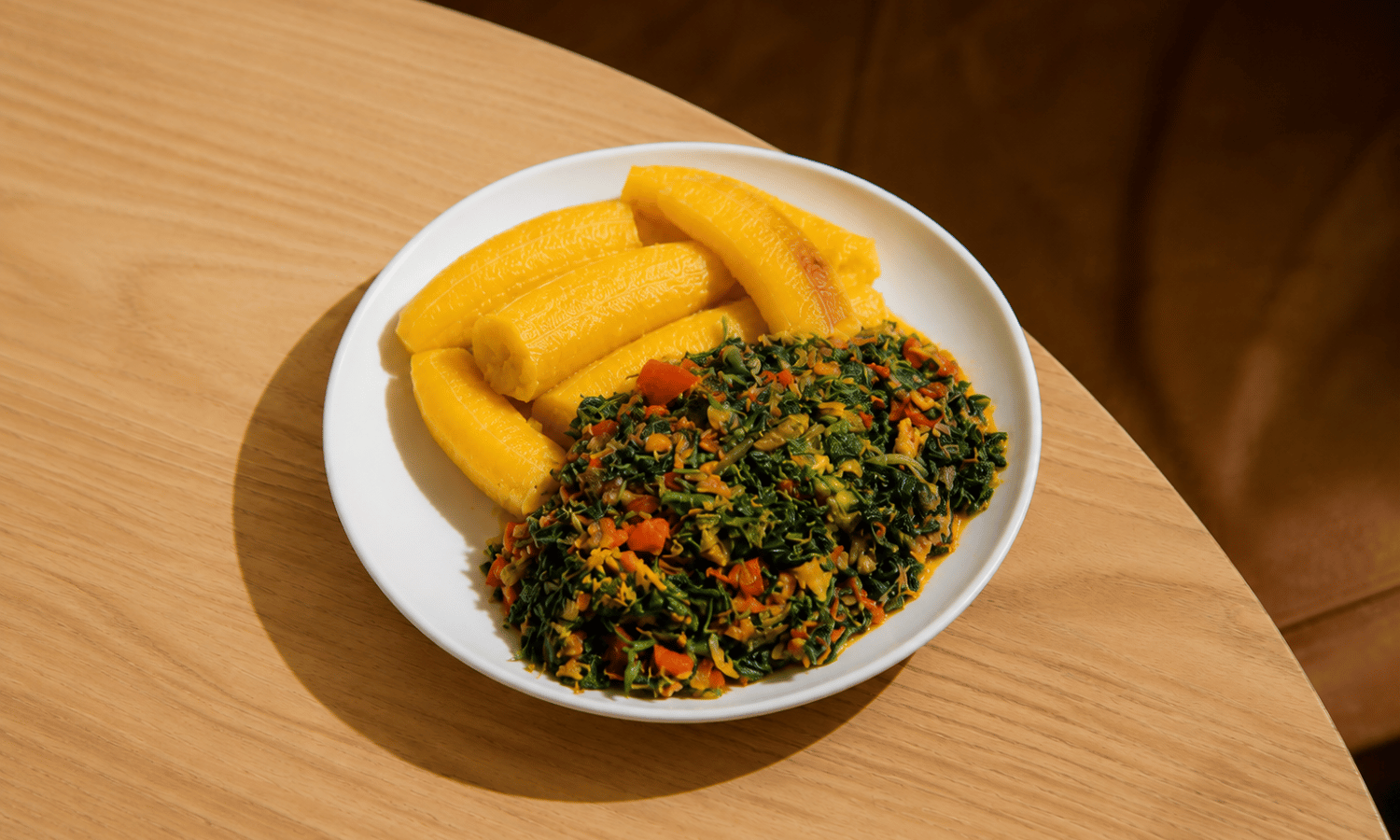
Boiled Unripe Plantain
Unripe plantain carries a much lower glycemic index than its ripe, yellow counterpart. That’s largely because it’s rich in resistant starch, a carbohydrate that resists digestion in the small intestine and ferments slowly in the gut instead.
Research on boiled unripe plantain has recorded glycemic index values in the mid-40s, well within the low-GI range. That means it releases energy gradually rather than spiking your blood sugar.
Boil or roast it instead of frying. Pair it with a vegetable sauce or a bowl of beans for a meal that keeps you satisfied for longer.
Okra Soup
Okra is naturally low in calories. Nearly half of its fibre content is soluble fibre in the form of gums and pectins. That fibre forms a gel-like texture in your gut, which slows down digestion and eases the release of sugar into your bloodstream. That same sliminess people complain about is actually doing a lot of work for your digestion and your blood sugar control.
Go easy on the palm oil when you cook it. Pair it with a smaller portion of swallow, whether that’s fufu or whichever local staple you usually eat it with, to keep the meal balanced.
Vegetable Soup
Built on a base of leafy greens, vegetable soup gives you fibre, iron, and a wide range of vitamins for remarkably few calories. Most of its volume comes from water-rich vegetables rather than starch or fat. That means you can eat a generous portion without worrying about it derailing your calorie deficit. Cut back on the oil, load up on the vegetables, and let this soup do the heavy lifting on your plate.
Fruit Bowl
Mix watermelon, pawpaw, oranges, and other fruits for a refreshing low-calorie snack or dessert. These fruits are made up mostly of water and fibre. That means you get real sweetness and volume without a heavy calorie cost. This combination also works well as a mid-afternoon option when you want something sweet but don’t want to reach for processed snacks.
Grilled Fish, Suya-Style
Fish like tilapia, mackerel, and catfish give you lean protein. Grilling, baking, or steaming your fish instead of frying it preserves that protein content. It also cuts a significant amount of unnecessary fat from the dish.
Season it with a dry pepper spice blend for that familiar smoky, peppery flavour.
Fonio Porridge
Fonio is a gluten-free ancient grain, and West African farmers have grown it for thousands of years. It consistently packs more fibre and protein than common staples like brown rice. Because it digests easily and keeps you full, fonio works well as a light porridge or side dish. It’s also a smart choice if you’re looking to diversify your grains beyond rice and the usual swallow staples. You still get something familiar in texture.
The Real Takeaway
Choose low-calorie African foods, use less oil, and pay attention to portions. Together, these habits create a sustainable calorie deficit without sacrificing flavour or satisfaction.
Start with one or two simple swaps from this list and build from there. Small, consistent changes are far more effective than extreme diets. Over time, they’ll help your nutrition work with your fitness goals instead of against them.
