
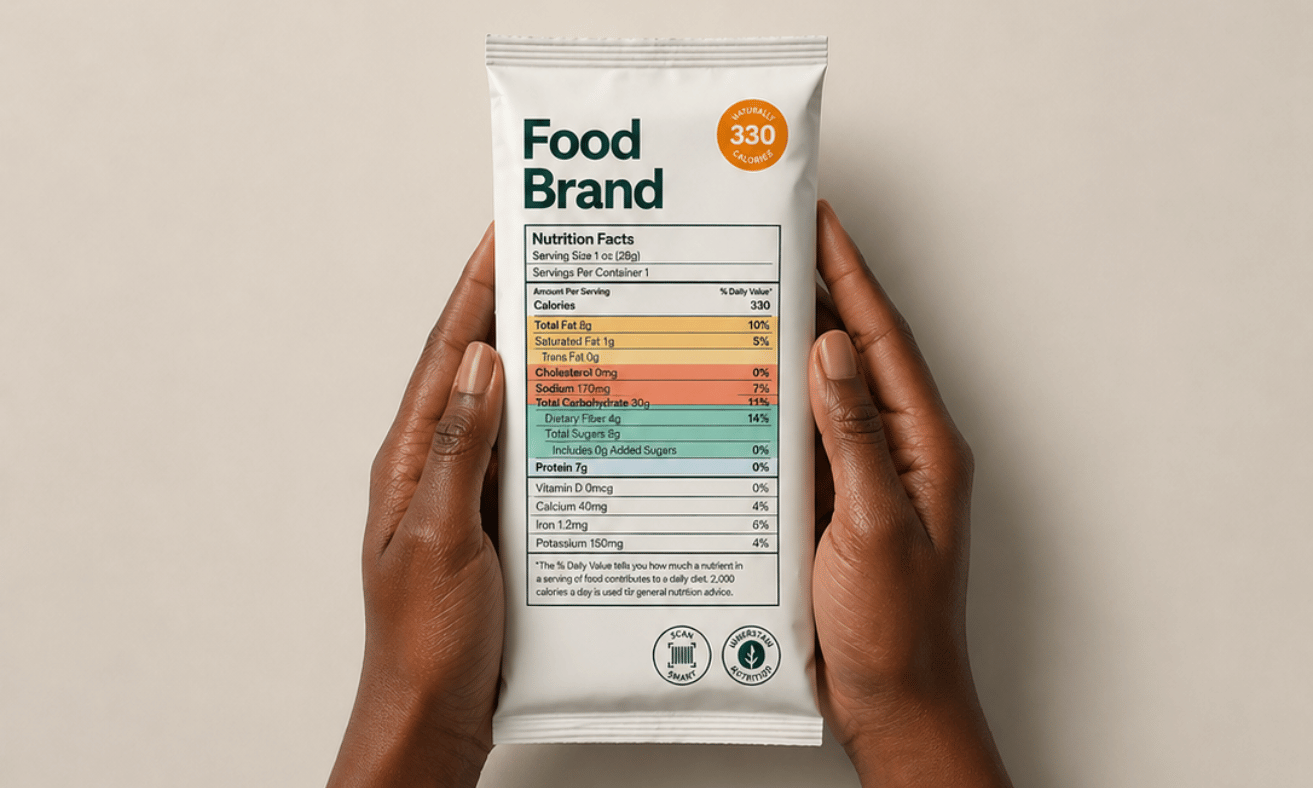
Most people think they know what they’re buying at the supermarket until they flip the pack over and actually read what’s inside. Learning how to read food labels changes the way you shop because it helps you see past the bright packaging and health claims that brands love to throw around.
A cereal can say “high in vitamins,” a yogurt can scream “low fat,” and a malt drink can call itself “natural,” yet the ingredient list can tell a completely different story. Once you understand what those labels are really saying, it becomes much easier to spot foods that actually support your health and the ones quietly working against it.
The Hierarchy of Ingredients
One thing many people don’t realize is that the ingredient list is arranged in order of quantity. That means the first few ingredients are the biggest part of the product. So if sugar, glucose syrup, refined flour, or vegetable oil show up at the top, that product is mostly made up of those things, no matter how healthy the front packaging looks.
This is why the back of the package matters more than the front. Brands spend money designing the front to convince you. The back is where the truth lives.
You also need to watch out for something manufacturers do all the time called “split ingredients.” Instead of listing sugar once, they break it into different forms like glucose syrup, fructose, maltodextrin, and cane sugar. Because they’re split up, each one appears lower on the list, making the product seem healthier than it really is. Meanwhile, the total sugar content is still high. That’s one of the biggest reasons understanding how to read food labels is so important today.
The Sodium Problem Most People Miss
Sodium is hiding in far more foods than people realize, especially instant noodles, canned foods, seasoning cubes, sauces, processed meats, and snacks. The tricky part is that many of these foods don’t even taste salty, so people assume they’re harmless.
Most nutrition labels show sodium “per serving,” but serving sizes are often unrealistic. A packet might claim to contain two or three servings even though most people will finish the whole thing in one sitting. That’s why checking the “per 100g” section gives a much more honest picture.
As a general rule, foods with more than 600mg of sodium per 100g are considered high in sodium. On the other hand, foods with 120mg or less are usually a better option. Once you start paying attention, you’ll notice how quickly sodium adds up throughout the day.
You should also remember that sodium doesn’t only appear as salt. It can show up through preservatives and flavor enhancers too, which is why heavily processed foods often contain far more sodium than expected.
Sugar Has Many Different Names
Sugar is probably the easiest ingredient to hide because it comes with dozens of different names. Brands know consumers are trying to reduce sugar intake, so instead of writing “sugar,” they use names like sucrose, dextrose, fructose, maltose, corn syrup, fruit juice concentrate, or maltodextrin.
A simple trick is to watch for words ending in “ose.” Most of them are forms of sugar.
And honestly, this matters more than people think. High sugar intake is linked to energy crashes, constant cravings, weight gain, insulin resistance, and Type 2 diabetes. Sometimes people feel tired all day without realizing the ultra-processed foods they eat are causing repeated blood sugar spikes.
If you want a simple benchmark, products with less than 5g of sugar per 100g are generally considered low sugar. Anything above 22.5g per 100g is very high.
When learning how to read food labels, this is one of the biggest things to pay attention to because sugar often hides behind “healthy” branding.
The Expert Checklist for Safe Grocery Shopping
Transitioning to an informed shopping style requires a disciplined approach. Before a product reaches your checkout counter, it should pass these four technical checks to ensure you are not unknowingly compromising your health.
- The Proportion Check: Do the first three ingredients align with the product’s name? If a “Honey Cereal” doesn’t have honey in the top three spots, the flavor is likely purely synthetic.
- The Additive Audit: Scan for long, complex chemical names like “Butylated Hydroxyanisole” (BHA) or “Potassium Sorbate.” If the list looks more like a laboratory inventory than a recipe, the product is probably ultra-processed and may need to be avoided.
- The Fiber-to-Carb Ratio: For breads and cereals, check the fiber content. A truly healthy grain should have at least 3g of fiber per 100g. If the fiber is near zero, the grain has been stripped of its nutrients, leaving you with empty calories.
- The Saturated Fat Limit: Look at “Total Fat” and check how much is “Saturated.” High levels of saturated fats, often derived from cheap palm oil derivatives, are major contributors to high cholesterol and arterial blockages.
Ultimately, the goal is to shift the power dynamic from the manufacturer to the consumer. The power shifts back to you the moment you flip that package over. By understanding exactly what is going into your body, you are making a conscious decision to prioritize your long-term vitality over short-term convenience. And to be honest, knowing how to read food labels is the one of the simplest, most effective health insurance you can own.
