
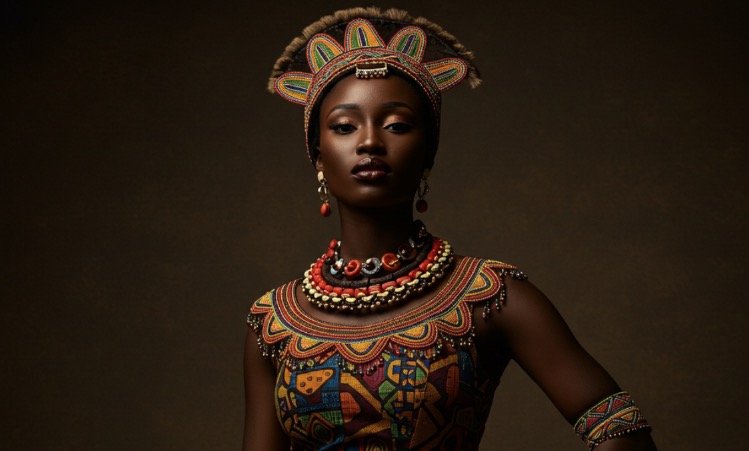
Reflections from seven African Women
Growing up, many of us learned what it meant to be a woman before we even understood the word. We were taught through whispered advice, careful correction, and the quiet examples of mothers, aunties, and grandmothers. Culture was the classroom and womanhood, the lesson. At Obaasema, we wanted to pause and ask: What exactly did culture teach us and what are we doing with that knowledge today?
So we reached out to women across the continent and the diaspora to reflect on the messages they received about womanhood, the ones they held onto, the ones they questioned, and the ones they’re now rewriting.
Their answers are honest, layered, sometimes tender, sometimes rebellious, but always true to the journeys they’re on. Before we get to the responses, let’s take a quick look at the subject matter.
What is womanhood?
Womanhood is the stage of life where a female identifies and functions as a woman, shaped by biological, social, and cultural factors. It includes how women experience identity, responsibility, and expectation, often influenced by tradition, personal values, and societal roles.
What is the true essence of womanhood?
The true essence of womanhood is the ability to fully embrace one’s identity, strength, and purpose while navigating the expectations of culture, society, and self. It involves making empowered choices, often based on your values and not just what culture, tradition, or society expects. It’s about getting to a place where you can decide for yourself what roles to accept or reject, how you show strength, care, ambition, or softness, and how to create a version of womanhood that is true to who you are.
As you read, we invite you to ask yourself: What did your culture teach you about being a woman and how has that shaped who you are today?
1. Amina Rashid, 33 – Kenya (Lamu)
“From a young age, I was taught that a woman’s strength lies in her silence. My Swahili culture praised women who were graceful, composed, and never confrontational. I thought keeping the peace meant I was doing well. But now, I see that silence isn’t always strength and that sometimes it’s a cage. I’m raising my daughter to know she has the right to speak, to question, and to be heard.”
2. Ifeoma Okeke, 42 – Nigeria (Igbo, based in the U.S.)
“Culture told me that a woman must serve, but it should be her family first, then her husband. My dreams were always third. I’ve since unlearned the idea that being a ‘good woman’ means putting yourself last. Today, womanhood for me means wholeness and being present for others without disappearing.”
3. Tsitsi Moyo, 28 – Zimbabwe (Harare)
“‘A woman must endure.’ That line was repeated so many times in my childhood. I wore it like armour. But I’ve learned that endurance without boundaries leads to burnout. I still carry strength but now I pair it with self-protection, with rest, and with voice. That’s the version of womanhood I want to pass on.”
4. Nana Ama Danso, 37 – Ghana (Accra)
“In my family, naming a girl was a powerful act. My grandmother believed names carry destinies. From that, I learned to honour myself and to speak and walk like someone who came from somewhere. My name connects me to my lineage, and womanhood to me means living with that awareness every day.”
5. Zola Mthembu, 31 – South Africa (Xhosa, Cape Town)
My aunt used to describe a woman with the phrase, ‘Soft but unshakable’. I still live by it. I was taught to nurture and to carry others. But I’ve added to that as I get older because I’ve learned that truth-telling is a part of nurturing too, even when it disrupts things. Strength can be gentle, but it must be real.”
6. Mirembe Nansubuga, 26 — Uganda (Kampala)
“Home-making was central to how we understood womanhood. Cooking, cleaning and being a quiet wife was the model. But I’ve found home in other ways, like creating space for growth, pursuing purpose, and a very critical area which is friendships that feed me. Culture gave me a base. But I’m building beyond it now.”
7. Chidera Ajayi, 40 – Nigeria (Yoruba, based in the UK)
“My mother used to say, ‘A patient woman builds her house.’ And yes, I saw how patience got her through life. But I also saw what it cost her. I’ve chosen not to inherit that version of womanhood without questioning it. Today, I believe being a woman means choosing, whatever it may be. It could be choosing joy, truth, and yes, even disruption when it’s needed.”
