
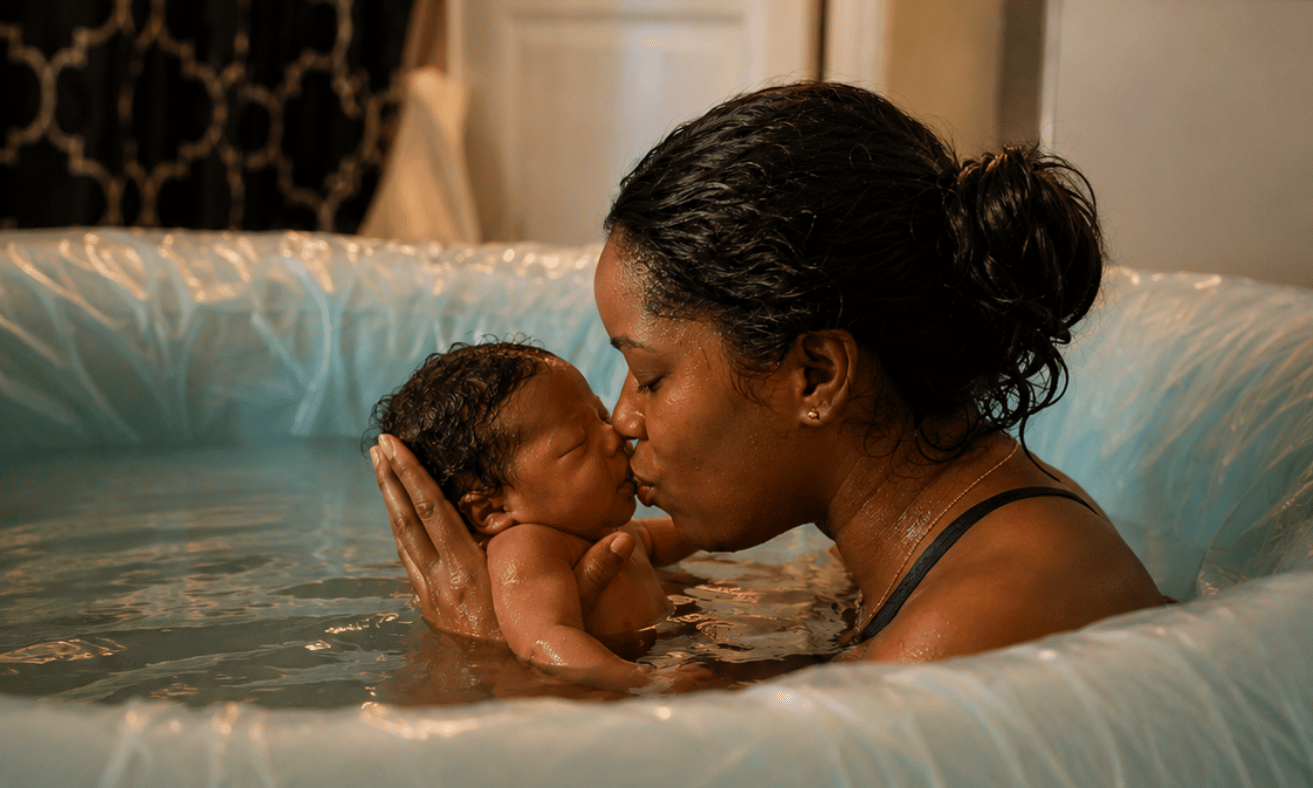
Mention water birth in almost any conversation, and you’ll probably hear the same questions. Can the baby breathe underwater? Isn’t it dangerous? Isn’t it just another social media trend? While those concerns are understandable, they also reveal how little many of us know about a birthing option that has been safely practised for decades.
Today, water birth is gaining attention around the world as more women explore birth experiences that prioritise comfort, movement and informed choice. That growing interest is also why the upcoming Midwife To Go Water Birth Training, taking place from 17 to 19 August, is bringing together maternity professionals to deepen their knowledge while helping expectant parents better understand what water birth really involves.
The truth is, water birth isn’t about following a trend or having the perfect birth story. It’s about understanding your options and making informed decisions with the support of trained healthcare professionals. Before you decide whether it’s for you, let’s separate the myths from the facts.
What Is Water Birth?
Simply put, water birth involves labouring in a specially designed birth pool filled with warm water. Some women choose to spend only the first stage of labour in the pool before moving to a bed to deliver their baby. Others remain in the water until their baby is born.
The water is carefully maintained at a safe temperature while trained healthcare professionals continue to monitor both mother and baby throughout labour.
A birth pool is also very different from a regular bathtub. It is deeper, more spacious and designed to allow mothers to move freely, change positions comfortably and stay supported throughout labour.
For many women, that freedom of movement is one of the biggest advantages. Instead of remaining in one position, they can kneel, squat, lean forward or gently sway with contractions, helping them work with their body rather than against it.
What Most People Get Wrong About Water Birth
The Baby Will Swallow Water
This is easily the most common misconception.
Healthy babies don’t take their first breath underwater because they continue receiving oxygen through the umbilical cord until they are born. They are also born with a natural dive reflex that prevents them from breathing or swallowing water immediately after birth. Their first breath happens only after they are gently lifted into the air.
Water Birth Is Only About Pain Relief
While warm water can make contractions feel more manageable, that is only part of the story.
Warm water encourages muscles to relax, reduces tension and makes it easier to move throughout labour. The buoyancy of the water also reduces pressure on the body, allowing many women to change positions naturally as labour progresses.
For many mothers, it’s not simply about less pain. It’s about feeling calmer, more comfortable and more in control.
Women Are More Likely to Tear
Many people assume giving birth in water increases the risk of tearing, but research suggests the opposite may be true for some women.
Warm water helps relax the muscles and tissues around the perineum, allowing them to stretch more gradually as the baby’s head crowns. Although tearing can still happen, relaxed tissues combined with controlled birth techniques may reduce the likelihood of severe tears.
Water Birth Isn’t Safe
This myth often comes from fear rather than evidence.
Research involving thousands of births has found that water birth is just as safe as giving birth on land for many women with healthy, low-risk pregnancies when attended by trained healthcare professionals.
Like every birth option, safety depends on proper assessment, careful monitoring and having experienced healthcare providers present throughout labour.
Once You’re in the Pool, You Have to Stay There
Not at all.
A birth pool is an option, not a commitment. Many women move in and out of the pool during labour depending on how they feel and how labour progresses. If at any point your healthcare provider recommends leaving the water, you can do so safely.
Why Water Birth Is Gaining Attention
For a long time, conversations around childbirth focused almost entirely on managing pain. Today, many women are asking a different question.
“How do I want to experience my birth?”
That shift has led more families to explore options like water birth, not because they’re looking for a perfect delivery, but because they want a birth experience that feels calm, supported and centred around their needs.
One of the biggest benefits of warm water is how it supports the body’s natural hormones.
When a woman feels safe and relaxed, her body produces more oxytocin, the hormone that powers labour. At the same time, stress hormones begin to decrease. That balance can help labour progress more smoothly while making contractions feel easier to manage.
Many women also describe feeling lighter once they enter the birth pool. The buoyancy of the water reduces pressure on joints and muscles, making it easier to move, rest between contractions and find comfortable positions.
Perhaps one of the most surprising things many mothers share is that pushing feels different.
Rather than feeling forced, many describe the urge to push as something that happens naturally. While every labour is unique, warm water often helps women respond to their body’s instincts instead of fighting against them.
Is Water Birth Safe?
For healthy women with uncomplicated pregnancies, the evidence is reassuring.
Large studies have shown that water birth does not increase the risk of serious complications for mothers or babies when appropriate guidelines are followed and trained healthcare professionals are present.
However, water birth is not suitable for everyone.
Certain pregnancy complications or medical conditions may require closer monitoring or interventions that cannot safely happen inside a birth pool. That is why your midwife or obstetrician will always assess whether water birth is the right option based on your individual pregnancy.
Ultimately, the safest birth is not determined by where it happens. It is determined by receiving the right care, in the right environment, with the right support.
Making an Informed Choice
Every birth is different because every woman is different.
For some, water birth offers a calm, empowering way to labour and give birth. For others, another approach may be the better choice. Neither experience is more valid than the other.
What matters most is having access to accurate information instead of outdated myths.
When women understand the evidence, ask questions and work closely with qualified healthcare professionals, they are better equipped to make decisions that feel right for them and their babies.
Perhaps that is the most important thing to remember about water birth. It isn’t about choosing the newest trend or the most talked-about birth method. It’s about understanding your options, trusting the evidence and making informed choices that put the health, safety and wellbeing of both mother and baby first.
